
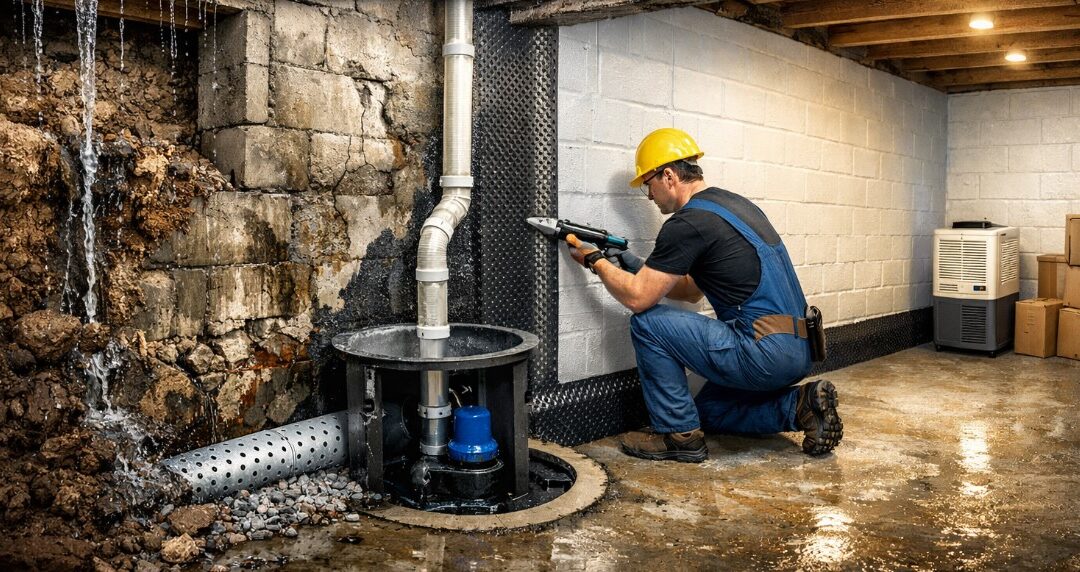
A dry basement is the cornerstone of a healthy and structurally sound home, yet moisture intrusion remains one of the most common challenges for property owners. When water breaches the foundation, it can lead to persistent odors, ruined belongings, and a significant decrease in your home’s overall market value.
Understanding the mechanics of how water enters a subterranean space is essential for implementing a permanent solution rather than a temporary fix. By identifying the environmental and structural vulnerabilities of your basement, you can take proactive steps to shield your investment from the elements.
The Force of Hydrostatic Pressure
As the ground around your home becomes saturated during a heavy downpour, the weight of the water creates immense hydrostatic pressure against your foundation walls. This physical force is often strong enough to squeeze moisture through the tiny pores of concrete or push it through the joint where the floor meets the wall.
- Monitor for “weeping” walls or damp spots that appear specifically during or after a rainstorm.
- Look for white, powdery mineral deposits known as efflorescence, which indicate that water is passing through the masonry.
- Check the “cove joint” at the base of the wall, as this is the path of least resistance for pressurized groundwater.
Relieving this external pressure is a critical step in stopping water from being physically forced into your living space.
Poor Exterior Drainage and Soil Grading
The way the land slopes around your home determines whether rainwater flows toward your foundation or away from it. If the soil has settled or was never graded correctly, your basement effectively becomes a collection basin for every gallon of water that falls from the sky.
- Ensure the ground slopes away from the house at a rate of at least one inch per foot for the first six feet.
- Look for “ponding” or standing water near the foundation, which suggests a grading or drainage failure.
- Verify that window wells are equipped with proper covers and drains to prevent them from filling like a bucket.
Redirecting surface water is the simplest and most effective way to reduce the workload on your basement’s waterproofing system.
Compromised Gutter and Downspout Systems
Gutters are designed to collect thousands of gallons of water from your roof and discharge it safely away from the house, but they can quickly become a liability if they are clogged. When gutters overflow, the water falls directly next to the foundation, saturating the soil and overwhelming your perimeter drains.
- Clear out leaves and debris twice a year to ensure that water moves freely through the troughs.
- Use downspout extensions to move the discharge at least ten feet away from the base of the home.
- Inspect the seams of your gutters for leaks that might be dripping water directly onto the foundation.
A functional gutter system acts as the first line of defense in keeping your basement dry and your foundation stable.
Soil Expansion and Foundation Cracks
Certain types of clay-heavy soil expand significantly when wet and contract when dry, causing the earth to exert a “push-pull” force on your foundation. This constant movement can lead to structural cracks that provide a direct highway for liquid water and vapor to enter your home.
- Identify horizontal cracks in the wall, which often signal that the soil is pushing too hard against the structure.
- Use specialized flexible sealants to patch hairline fractures before they are widened by the freeze-thaw cycle.
- Monitor for vertical offsets in the floor, which suggest that the sub-base is shifting unevenly.
Maintaining a stable environment for your foundation prevents the mechanical failures that allow water to bypass the concrete.
Window Well and Entryway Vulnerabilities
Basement windows that sit at or below the ground level are frequent entry points for water if they are not maintained properly. If the drain at the bottom of a window well becomes clogged with leaves or dirt, the well can fill with water until it reaches the level of the glass and leaks inside.
- Clean out debris from the bottom of window wells regularly to ensure the drain remains open.
- Install high-quality plastic covers to deflect rain and prevent snow from piling up against the window.
- Check the caulking around the window frames to ensure a watertight seal against the masonry.
Securing these localized entry points ensures that your basement remains a sealed environment during the most intense storms.
Strengthen Your Home’s Structural Defense
Taking the time to identify the primary causes of basement leaks is the best way to ensure the long-term longevity of your property. By neutralizing the threats of hydrostatic pressure and poor drainage, you effectively eliminate the risk of mold growth and structural decay.
The peace of mind that comes with a dry basement allows you to fully utilize your home’s square footage for living or storage. Your home is a significant investment, and a proactive approach to moisture control is the key to maintaining its value and safety for generations.