
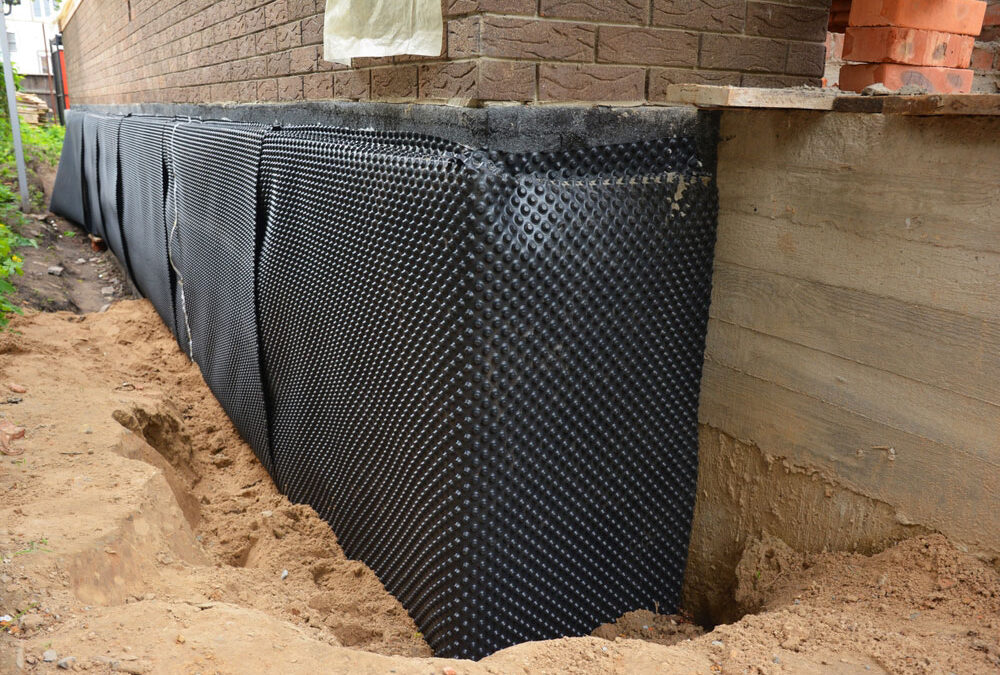
Exterior waterproofing serves as the primary subterranean shield for your home, preventing groundwater from ever making contact with your foundation walls. When this protective barrier degrades or sustains damage, the structural integrity of your entire property is placed at significant risk.
Recognizing the early indicators of a waterproofing failure allows you to intervene before moisture causes irreversible decay or mold growth. Staying vigilant regarding these external and internal cues ensures that your basement remains a dry, usable, and safe environment for your family.
Identify New or Expanding Foundation Cracks
As an exterior membrane fails, water begins to exert direct hydrostatic pressure against the concrete or masonry of your foundation. Over time, this constant force creates structural fractures that act as a direct highway for liquid water and vapor to enter your home.
- Look for horizontal cracks that suggest the soil outside is saturated and pushing against the wall.
- Watch for diagonal fractures starting at the corners of windows or doors in the basement.
- Monitor existing hairline cracks to see if they are widening or beginning to “weep” moisture.
Even the smallest opening in your foundation is a clear signal that the external waterproofing is no longer providing a seamless seal.
Search for Interior Dampness and Efflorescence
One of the most common signs that water is bypassing your exterior defense is the appearance of white, powdery salt deposits on your interior basement walls. This substance, known as efflorescence, is left behind when water evaporates after traveling through the porous concrete.
- Feel for “cold spots” or dampness on the surface of the foundation walls during a rainstorm.
- Identify patches of peeling paint or bubbling plaster near the base of the floor.
- Look for dark water stains that move upward from the floor-wall joint.
Persistent dampness inside your home is the definitive proof that the moisture barrier on the outside has been compromised.
Monitor for Sinking or Eroded Landscaping
If the exterior drainage system—which works in tandem with waterproofing—fails, water will begin to pool and saturate the soil directly next to your house. This saturation causes the earth to settle or wash away, often leaving visible depressions or “sinkholes” along your home’s perimeter.
- Check for areas where the soil has pulled away from the foundation, leaving a visible gap.
- Look for “ponding” or standing water in your flower beds long after the rain has stopped.
- Notice if your mulch or decorative stone is constantly being washed out toward the yard.
Changes in the elevation of the ground near your walls indicate that water is collecting exactly where it shouldn’t be.
Check for Persistent Musty Odors and Mold
A failed waterproofing system often leads to a rise in relative humidity within the lower levels of your home, even if you don’t see standing water. This chronic moisture creates the perfect breeding ground for mold and mildew, which announce their presence through a distinct, heavy scent.
- Pay attention to a “basement smell” that doesn’t go away with increased ventilation or air fresheners.
- Inspect the back of wooden furniture or cardboard boxes stored against exterior walls for fuzzy growth.
- Look for black or green spotting along the baseboards and lower sections of drywall.
If you can smell moisture, the exterior barrier is likely allowing vapor to migrate through the walls at a molecular level.
Inspect the Condition of Visible Sealing Layers
In some homes, the top edge of the exterior waterproofing membrane or coating is visible just above the grade line. If you notice that this material is becoming brittle, cracking, or peeling away from the concrete, it is a strong indicator that the subterranean portions are also failing.
- Look for “alligatoring” or deep cracks in the black tar or rubberized coating on the exposed foundation.
- Check if the flashing or termination bar at the top of the membrane has become loose or detached.
- Identify any vegetation or roots that have grown into the sealing layer, potentially puncturing the barrier.
Degraded materials at the surface level are often a mirror for the condition of the system buried deep underground.
Protect Your Home From Costly Water Intrusion
Taking immediate action when you spot these warning signs is the only way to prevent a minor leak from turning into a major structural disaster. By reinforcing or replacing a failed exterior system, you effectively reset the clock on your home’s foundation health.
The peace of mind that comes with a high-performance waterproofing system allows you to enjoy every season without the fear of a flooded basement. Your property is your most valuable asset, and maintaining its exterior shield is the most effective way to ensure it remains a dry and stable sanctuary.